


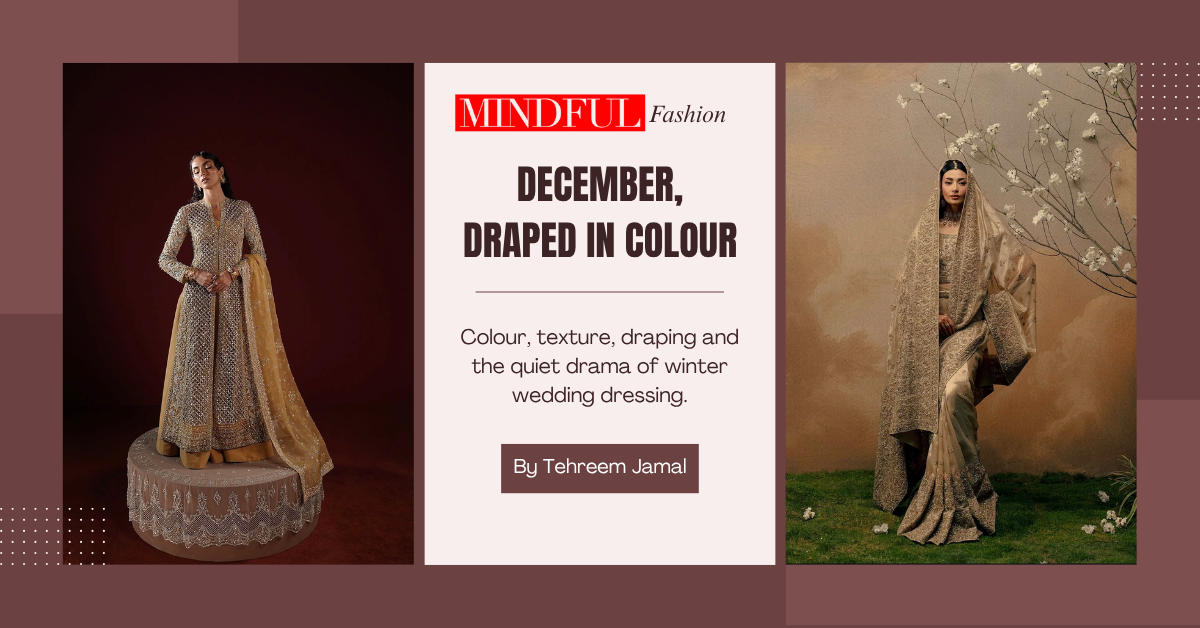
Colour, texture, draping and the quiet drama of winter wedding dressing.
By Tehreem Jamal
December is not simply wedding season in Pakistan; it is fashion season with a guest list.
And while bridal dressing will always have its beloved reds, golds and jewel tones, this season’s most exciting looks are proving that winter wedding style does not have to follow one formula. The current mood is richer in colour, more varied in silhouette and, perhaps most importantly, more intentional about draping. The dupatta has become part of the outfit rather than an afterthought.
From midnight blues and antique golds to raspberry pinks, teal, peach and unexpected flashes of lilac, the Pakistani winter wardrobe is becoming increasingly expressive.
Bring Colour to the Cold
For years, December wedding dressing has been associated with deeper shades. Burgundy, bottle green, navy and black come out almost instinctively as soon as the temperature drops. They are still here, but this time they feel less predictable.
Take deep navy. Against intricate tonal embroidery, sequins and sheer detailing, it becomes almost black at first glance, then catches the light in layers of sapphire and midnight blue. It has the drama of black without being quite as severe. Paired with silver jewellery or crystal embellishment, the effect is regal but still modern.
Black itself is also having a particularly glamorous moment. Instead of relying on colour for impact, a black velvet silhouette lets texture do all the talking. Silver embroidery around the neckline, cuffs or bodice instantly sharpens the look, while the weight of velvet gives the outfit a distinctly winter feel. It is the kind of outfit that understands the assignment for a December shaadi: elegant, warm and completely effortless-looking, even when we all know Pakistani formalwear is rarely effortless to assemble.
At the opposite end of the spectrum, the season is refusing to abandon colour.
Vivid raspberry, fuchsia and berry reds feel especially striking in lehenga silhouettes. Against antique gold embroidery, these shades look festive without falling into traditional bridal red. A rich pink lehenga scattered with floral motifs feels youthful, celebratory and incredibly photogenic—particularly when paired with a sheer dupatta that lets the colour remain visible rather than covering it.
Then there are the softer metallics. Champagne, muted gold and beige are becoming the answer for anyone who wants grandeur without loud colour. These shades rely on craftsmanship: mirror work, metallic thread, crystal embellishment and intricate surface detailing. Under warm wedding lighting, the result is almost liquid. Gold does not have to scream; sometimes it simply glows.
The Case for Teal
If there is one colour that deserves a serious moment this wedding season, it is teal.
Deep blue-green shades sit beautifully between traditional jewel tones and more contemporary colour palettes. They feel luxurious enough for evening functions but fresh enough for daytime celebrations.
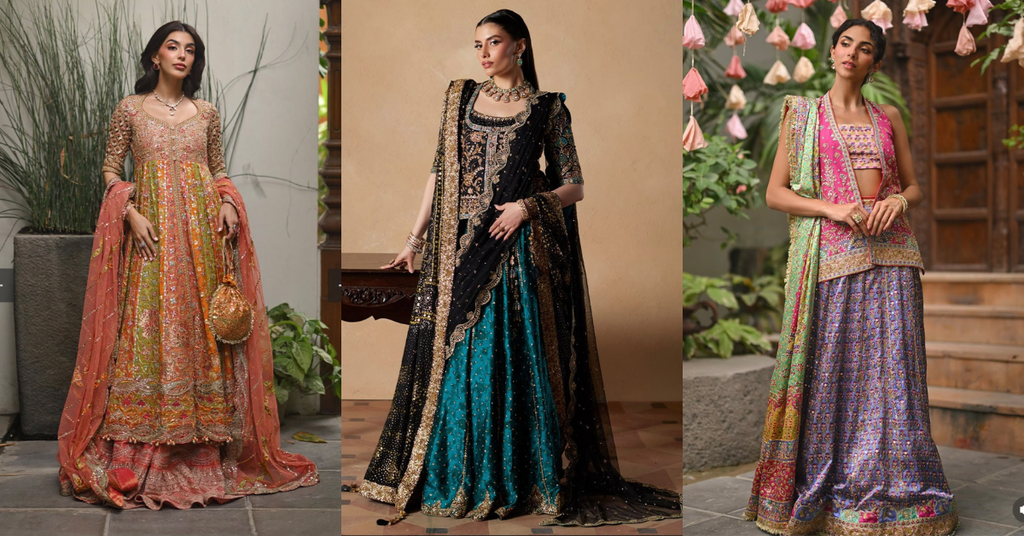
What makes teal particularly interesting is how differently it behaves depending on the accompanying colours. Pair it with darker navy and it becomes sophisticated. Add antique gold and it feels regal. Bring in coral, raspberry or magenta borders and suddenly the entire look becomes playful.
One of the strongest directions this season is the use of tonal layering—a teal shirt over a deeper blue skirt, with a printed dupatta pulling both shades together. Rather than matching everything exactly, the colours live within the same family.
That slight mismatch is what makes it interesting.
Pakistani formalwear is at its best when you notice something new every time you look at it: a contrasting border, a flash of pink thread, a green panel hidden within a blue print or an antique-gold reverse on a dupatta. December dressing is becoming less about wearing one colour from head to toe and more about building a palette.
Draping Is the Moment
A beautiful outfit can completely change depending on how the dupatta is worn.
This winter, the dupatta feels less like the final accessory thrown over one shoulder five minutes before leaving home and more like an intentional styling tool. Anyone who has ever been half-ready while someone outside the room is calling “jaldi karo” knows the dupatta is usually the last thing to be dealt with—but this season, it deserves a little more attention.
With lehengas, the classic diagonal drape across the torso remains one of the most flattering choices. It frames the blouse, draws the eye towards the waist and creates a strong vertical line without hiding the skirt. For heavily embroidered pieces, allowing the dupatta to fall over one shoulder and trail behind creates movement while keeping the craftsmanship visible.
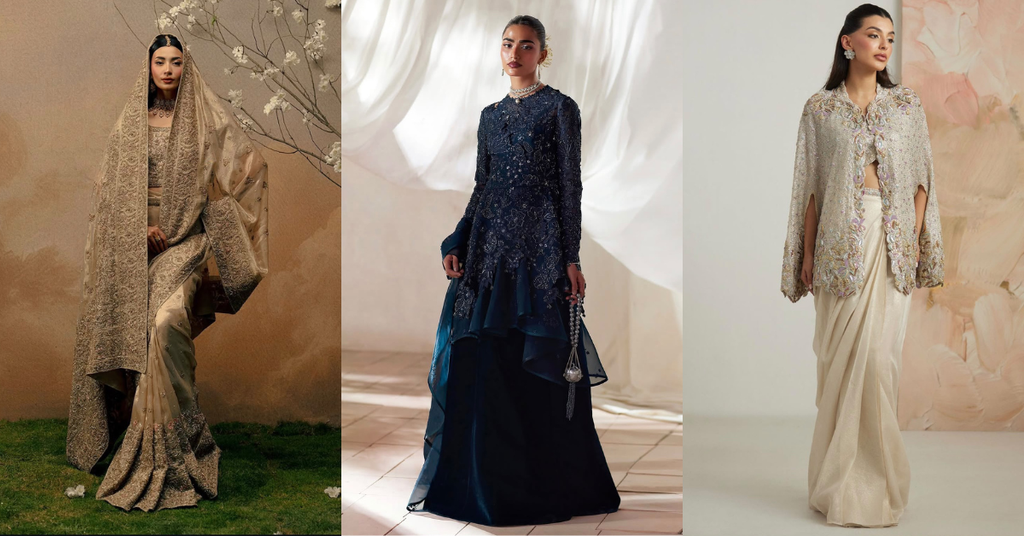
For more traditional silhouettes, however, the mood is becoming wonderfully dramatic.
A large dupatta worn over the head and allowed to fall almost like a veil creates an old-world softness that feels particularly beautiful for winter weddings. With ivory, taupe and antique metallic outfits, this style can feel almost painterly. The sheer fabric softens the jewellery and embroidery beneath it, while a heavily worked border frames the face.
There is something incredibly romantic about bringing back that sense of scale—a little purani duniya glamour without making the look feel dated.
The Pakistani dupatta was never meant to be shy.
And for anyone who prefers a sharper silhouette, a structured side drape works beautifully with long jackets, peplums and straight shirts. Instead of arranging fabric across the entire outfit, let the dupatta fall from one arm or shoulder. This leaves the front clean and uninterrupted, particularly effective when the garment itself features dense embroidery.
Sometimes the best draping decision is simply knowing what not to cover.
Daylight Wants Colour
For daytime December events, the palette becomes noticeably more playful. Coral, peach, lavender, pistachio, turquoise and pink all come alive against outdoor settings. The colder season means these shades no longer read as purely summer colours; instead, heavier embroidery and deeper accents give them enough richness for winter.
Printed lehengas and multicoloured dupattas are particularly effective here. Rather than relying on one dominant shade, several colours can appear in conversation with one another.
A lavender-blue skirt paired with a hot-pink waistcoat, for example, immediately feels celebratory. Add mint, gold and coral through the dupatta and embroidery, and suddenly the outfit has the joyful energy of a mehndi without relying on the usual bright-yellow formula.
The trick is balance. If the outfit contains several colours, repeating one or two shades through the jewellery, blouse detailing or border makes everything feel intentional rather than chaotic.
And After Sunset, Bring the Drama
Night weddings are where December earns its reputation.
This is where navy turns almost inky, gold becomes warmer, velvet absorbs the light and silver embellishment begins to sparkle. Deeper backgrounds allow embroidery to stand out, which is why jewel tones work so beautifully after dark.
Instead of automatically choosing red, consider aubergine, peacock blue, forest green, raspberry, black or petrol. Even a neutral outfit can feel evening-appropriate when the metallic work is dense enough.
The styling can become richer too. Layer necklaces. Add statement jhumkas. Let the dupatta pool slightly instead of pinning every inch into place. Wear the longer hem.
Winter permits a little excess.
Ultimately, this Pakistani December wedding season seems less concerned with strict rules than with richness.
Richness of colour. Richness of fabric. Richness of embroidery. Richness in the way a dupatta folds over the shoulder, the way velvet absorbs light or the way gold thread suddenly catches it.
The most memorable looks are not necessarily the heaviest ones. They are the outfits where every choice feels connected: a deep teal picked up again in the border, a coral dupatta warming an orange lehenga, silver jewellery echoing embroidery on black velvet or a sheer ivory drape softening an intensely embellished ensemble.
And perhaps that is the beauty of December dressing in Pakistan. The season gives us permission to be a little more romantic, a little more dramatic and a lot less afraid of fabric.

