


The rise of competitive chess in Pakistan
At just 16, national champion and international representative Ahmed Moeed Yusuf reflects on Pakistan’s rapidly evolving chess landscape — from grassroots clubs to global tournaments — and what it will take to turn rising talent into sustained excellence.
As a 16-year-old chess player who has spent the past several years competing across Pakistan and internationally, I’ve had a front-row seat to a transformation that many outside the chess community have yet to notice. Chess in Pakistan is rising — not slowly, but rapidly — driven by young players, passionate clubs, and growing national visibility. What was once a scattered, informal hobby is steadily becoming a structured, competitive sport with real opportunities.
When I first began playing competitively, tournaments were limited, and FIDE-rated events were especially rare. Today, the landscape looks very different. Lahore alone now hosts thriving clubs such as Kings Chess Club, Lahore Chess Club, and Board Breakers Chess Club, all of which organize regular FIDE-rated tournaments that attract players from across the province. Islamabad has developed strong hubs through the Islamabad Chess Association and its affiliated school clubs, while Karachi continues to expand through active venues like Karachi Chess Club and Royal Chess Club, alongside several community-based academies. Together, these institutions are creating structured pathways for young players — something my generation desperately needed and is now beginning to benefit from.
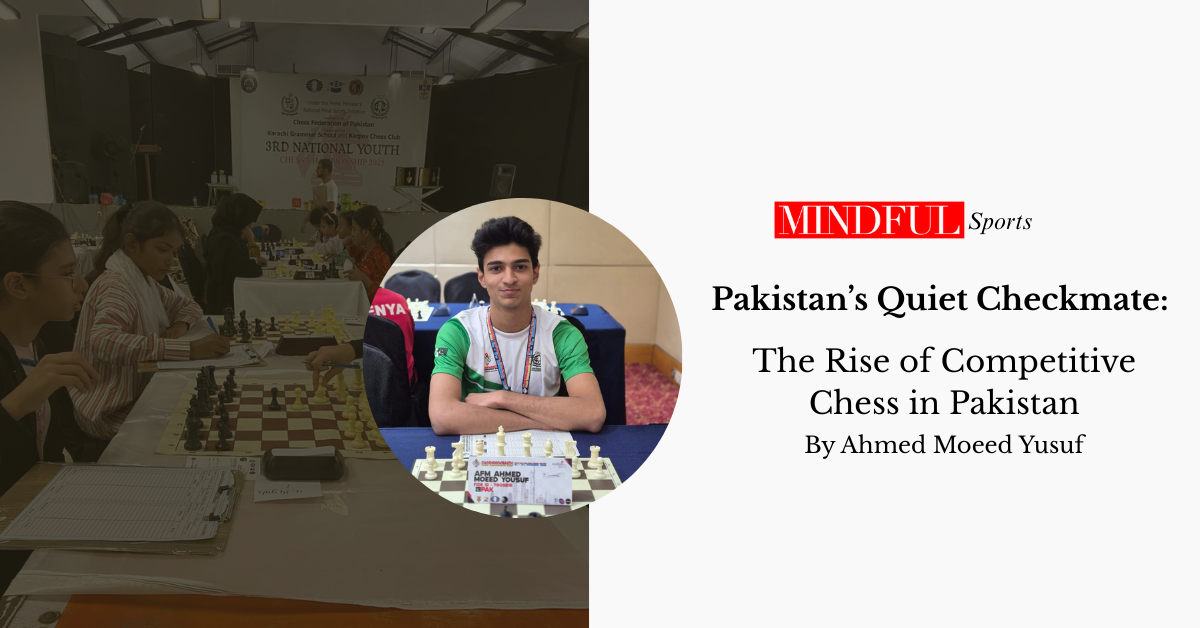
My own journey reflects how these expanding opportunities are shaping young players. I have been fortunate to win the National Under-16 Open Category at the 3rd National Youth Chess Championship in Karachi (2025), as well as the Azadi Cup Lahore FIDE-Rated Chess Championship. Over the past two years, I have been awarded the Pakistan Green Blazer multiple times, representing Pakistan at international events including the FIDE World Youth Chess Championship in Albania, the Commonwealth Chess Championship in Malaysia, and the 26th Asian Youth Chess Championship in Kazakhstan. Earlier in my career, I also competed at the Asian Schools Chess Championship in Thailand, the Western Asia Junior Chess Championship in the Maldives, and several national championships, where I consistently placed among the top ranks. Along the way, I earned the official FIDE titles of Arena Candidate Master (ACM) and Arena FIDE Master (AFM), awarded for consistent performance against rated international opponents under FIDE’s global arena system.
However, I am far from alone. Pakistan’s youth chess movement is being shaped by a remarkable group of rising stars. Players such as Isaam Bashir, Amr Hashmi, and Aayat Asmi have each won international medals at prestigious events including the Asian Schools Championship and the Western Asia Youth Championships. Their achievements have helped place Pakistan on the global chess map and inspired a new generation of players entering the competitive circuit.
Despite this progress, significant challenges remain. Pakistan currently has only a handful of International Masters and no active Grandmasters, while neighboring countries like India have produced more than 80 Grandmasters and over 120 International Masters. The gap is substantial. This year, our federation organized an international training camp with Kazakhstan. While this was a valuable first step, regular access to high-level international coaching is essential if we are to compete at the same level. Without sustained investment, institutional support, and consistent exposure to global standards, Pakistani players will continue to face disadvantages despite their talent.
Even so, I remain optimistic. I see more children learning chess in schools, more tournaments being organized nationwide, and more parents encouraging their children to pursue the game seriously. The foundations of a national chess renaissance are already in place; what remains is to build upon them.
If Pakistan continues on this path, I believe we can develop a new generation of internationally competitive players. I hope to be part of that journey — not only as a player, but as someone who has witnessed and contributed to the rise of chess as a true sport in Pakistan.

