


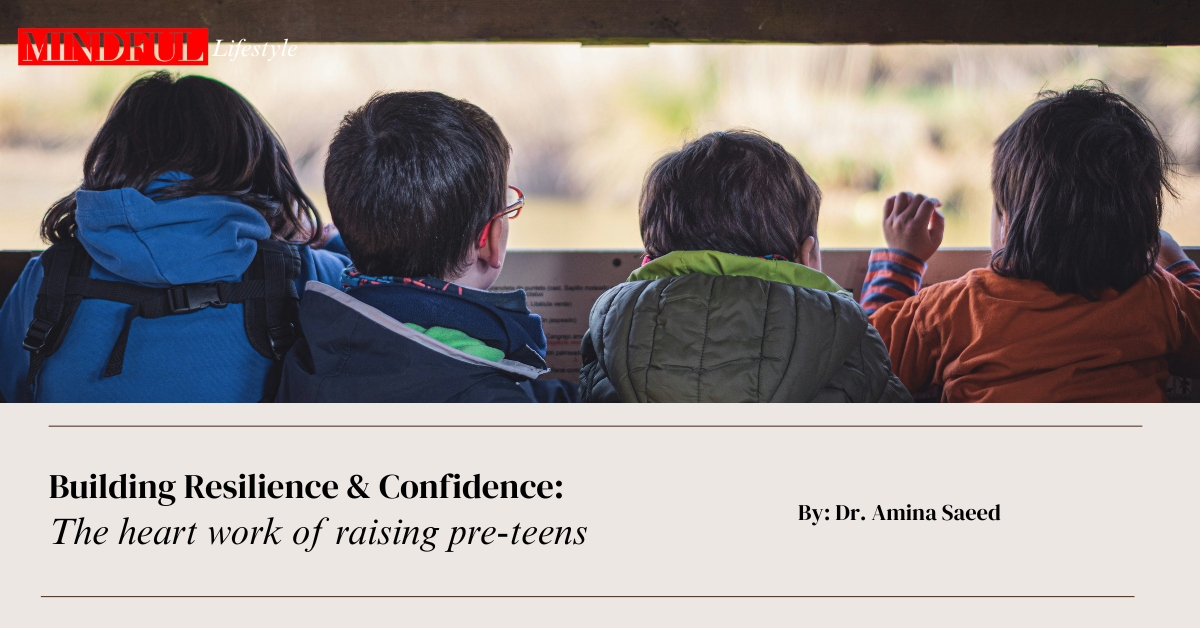
The heart work of raising pre-teens
Dr. Amina Saeed shares gentle guidance and practical strategies to nurture independence, understand emotions, and help children navigate the delicate journey of early adolescence.
Pre-teen (9–12) — yani: teenage years se qabl kuch saal.
This stage is one of deep vulnerability, marked by significant physiological and neurological transitions. The brain is a complex organ that is still not fully understood; however, medical science tells us that at this age it is actively developing and undergoing rapid change. The prefrontal cortex—the area responsible for decision-making, organization, working memory, and other higher cognitive functions—has not yet fully matured.
In contrast, the limbic system is highly active—the part of the brain that governs emotions, fear, pleasure, and reward.
Is liye bacha aksar zidd nain karta balkay, his brain is simply navigating the bridge between childhood and adolescence. Understanding what is happening inside the developing brain helps adults respond with greater wisdom, patience, and compassion.
Being a parent does not come with a manual. The journey is rocky and emotional. It carries a responsibility that rarely gets acknowledged —the responsibility of raising a child who is emotionally stable, happy, mentally resilient, physically healthy, and able to thrive in today’s demanding world. This is one of the most profound duties placed on parents’ shoulders.
Kids sense anger—even micro-gestures hinting at anger or rejection. It is not always what we say, but how we say it. Their brain emotionally shuts down when they sense judgment or command. They seek independence but still need guidance. Let’s try tweaking our communication skills to enable the younger generation to be more vocal and confident, and less scared and shattered.
Practical ways to communicate better:
1. Tone is everything: anger activates their fear circuits, whereas calmness activates their logical brain. Let’s replace “tum baat nain suntey” with “let’s discuss what’s going on.”
2. Listen more, lecture less: phrases like “I’m listening,” “I understand” and “I’m here” build trust—provided you mean it.
3. Give them choices: “Homework abhi kero” → “Homework now? or in 30 mins?”
4. Validate their emotions: I cannot stress this enough. “It must have been hard for you” instead rona of “larki ki tarah band kero” during an emotional meltdown.
5. Avoid comparison and shame: with friends, cousins—with anyone.
6. Create small moments of connection: bedtime, small walks, a drive to the grocery store, cleaning a cupboard, cooking. Kids tend to engage more during shared activities rather than sitting across from them for “talks.”
7. Teach emotional language: help them identify how they feel. Are they frustrated? Sad? Did something feel unfair?
8. Encourage expression: let them write, paint, talk, ask for space, or take a break.
9. Talk openly but respectfully about puberty and body changes: they might find it cringe—but it’s worth it. Educate them about body shaming.
10. Protect them from overstimulation: screens, overscheduling, sugar, caffeine, energy drinks.
11. Encourage curiosity: instead of “bachey yeh nain kertey.”
12. Be a safe space: they should know—i can go to my mum/dad.
13. Adequate sleep: essential for the growing mind and body.
14. Physical activity / sports
Kids crave love, just like an adults. Unconditional love—not based on academics, good behaviour, achievements, A-star grades, or trophies.
Let’s communicate with passion, listen with intent, and be kind. A child remembers how they are made to feel, and that feeling lingers in the soul forever. Let’s help them emotionally regulate their feelings instead of carrying heavy baggage that settles in the soul and truly never leaves.
Let’s love fearlessly.

