


Hospitality is a Luxury When Systems Fail.
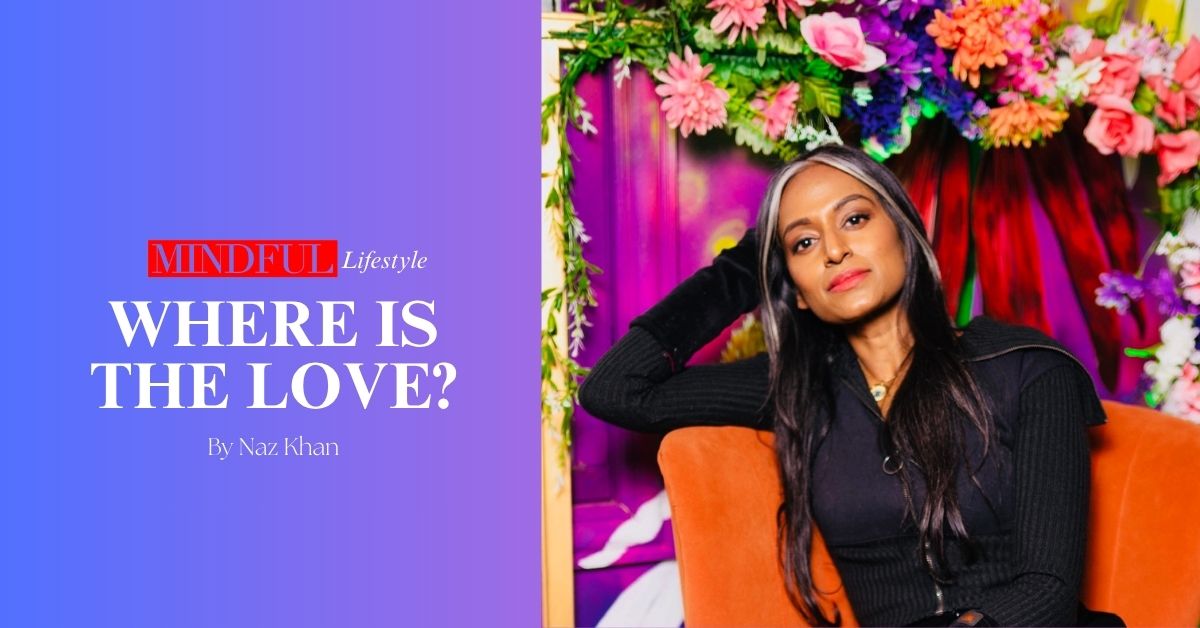
After relocating from Chicago to Lahore with the hope of giving back, service design strategist and educator at Beaconhouse National University, Naz Khan reflects on how everyday interactions reshaped her understanding of trust, hospitality, and belonging.
At 46, I moved to Lahore from Chicago, where I was born and built a 20-year career in tech, much of it as a traveling consultant with firms like Accenture and Deloitte. I’m used to living alone and working across cultures. I arrived with experience, independence, and a clear intention: to conduct research, join academia, and give back to my roots, much as my father had.
As a teenager, he brought our family to Lahore “to give us culture.” And he did. Our home was always open—crowded with guests, extended family, and people in need. Respect was practiced, not performed: those who worked in our home ate with us, served themselves first, and were treated with dignity. We lived simply and gave freely. Generosity was not charity—it was obligation.
Decades later, I returned with that same spirit. I came to teach Service Design—trained to look beyond surface interactions and map the systems that produce them. When a service fails, the problem rarely lies with the frontline actor; it is designed into the system itself.
I came looking for the hospitality and generosity I had known growing up. Instead, I encountered something far more transactional.
As a single woman living alone in Lahore, with no close relatives nearby, I learned quickly that respect is conditional—and often absent. Few Pakistanis seem aware of the realities faced by women living alone. Without a man’s presence, you are exposed to harassment, exploitation, and casual disregard across class lines. Independence is not admired; it is tested. My journal is filled with incidents involving Airbnb hosts, drivers, domestic staff, acquaintances, and referred businesses—from car rentals to lodging—where harassment, intimidation, or price gouging became routine. Reporting rarely feels like an option. A single woman’s account is too easily dismissed. In most cases, there is no meaningful recourse—only the quiet pressure to comply and move on.
As a woman, I was struck by the absence of solidarity among women. While there are exceptions, many interactions are shaped by suspicion, competition, quiet hostility, and gossip. Sociology describes this as “horizontal hostility”—when marginalized groups compete because structural constraints leave little room for security or mobility. Patriarchal systems are often reinforced not only by men, but by women who find security within them.
Trust becomes unsustainable under these conditions. I have encountered dishonesty and manipulation across professions, income levels, and social circles. The pattern is not isolated; it is ambient. The result is a constant state of vigilance.
There is also a deeper structural problem: the normalization of opportunism. Too often, interactions revolve around access—to your money, your network, or your perceived advantage. Lahore’s polished infrastructure sits atop systems that feel unaccountable and resistant to change. Bad behavior carries little cost. Apologies are rare. Confrontation is discouraged. The burden shifts to the individual to endure, adapt, or withdraw.
The widely marketed narrative of Pakistani hospitality did not extend to me. Perhaps it is selectively offered to foreigners who fit a certain image. I do not. I move through the city alone, avoiding dependence on people or systems I cannot trust.
This is not culture shock. It is what life looks like when accountability is optional.
At 5’3″ and 100 pounds, I am read in extremes: either a threat or an easy target.
I remain grateful to those who have shown me otherwise—especially Sadaf Atif, who offered me the security of her home; my cousin Saleem Azmat, who helped me secure housing and transportation; and Rashid Rana, who gave me the opportunity to teach Service Design at Beaconhouse National University, where I could practice with integrity. My students—and the environment at BNU—have made this experience more rewarding than any work I have done, and perhaps the only reason I remain.
But gratitude for a few individuals cannot substitute for the absence of accountability in a city of over 12 million.
As a service designer, Lahore feels like a system under strain. Economic disparity, weak institutional enforcement, and limited social protections create conditions where survival takes precedence over principle. In such environments, trust erodes, accountability weakens, and opportunistic behavior becomes normalized—not as an inherent cultural trait, but as an adaptive response to instability and scarcity.
Where systems fail, individuals compensate.
And when that happens, hospitality stops being a shared value—and becomes a privilege.
Naz Khan is a digital product leader and service design strategist working at the intersection of systems, technology, and human behavior. She has led large-scale transformations for global organizations, including Marriott Bonvoy, and contributed to the redesign of Toronto’s public transit ecosystem. With a background in Human-Centered Design and Design Thinking, her work examines how institutions shape everyday experience. She is also a filmmaker exploring power dynamics, culture, and storytelling.

