


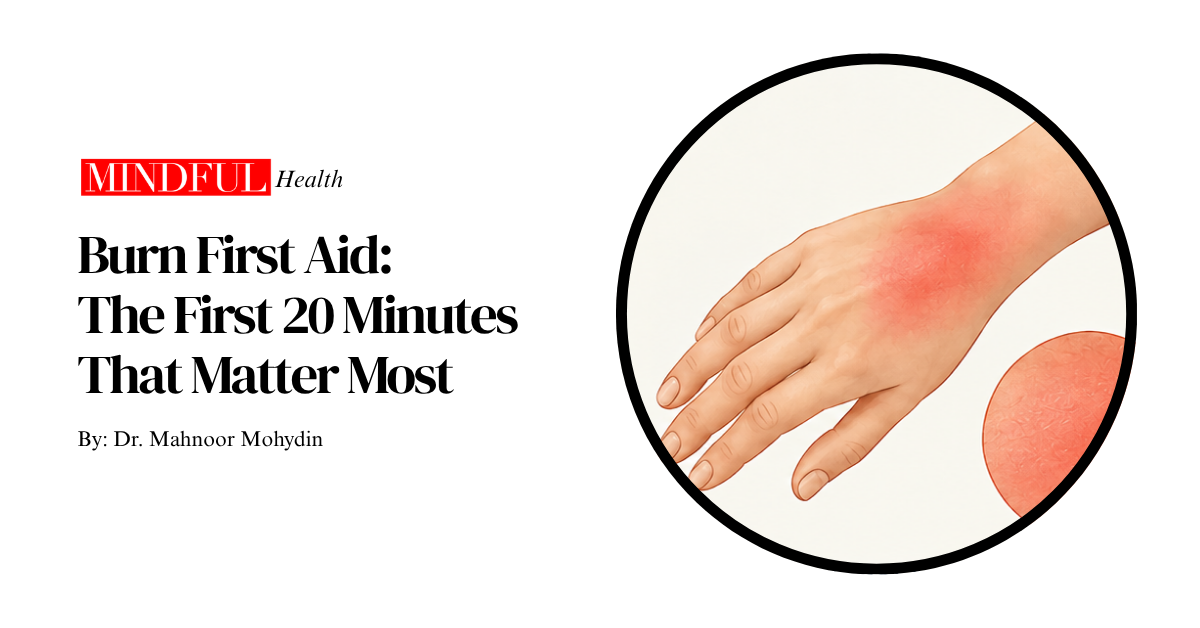
A burn can happen in seconds, but what you do immediately afterward can significantly affect healing. Dr. Mahnoor Mohydin explains the essential first-aid steps, common mistakes to avoid, and when a burn requires urgent medical attention.
“Many burn injuries become worse not because of the burn itself, but because of the actions taken—or not taken—in the moments that follow.”
Burn injuries can happen in an instant and may have serious consequences. They can result from boiling liquids, hot surfaces, flames, chemicals, electrical sources, or prolonged sun exposure. While many burns occur due to accidents or occupational hazards, some are caused intentionally through violence, including acid attacks and other forms of abuse.
A burn may appear minor initially, but incorrect first aid can deepen tissue damage, delay healing, and increase the risk of complications. The first 20 minutes after a burn are critical. Prompt and appropriate care can help limit injury, reduce pain, and support recovery.
Know Your Burn: Understanding the Different Types
Burns are classified by healthcare professionals based on their depth and cause. These factors determine severity and guide treatment:
A) Burns by Depth of Injury
“Burn severity is determined not just by appearance, but by how deeply the skin and underlying tissues are affected.”
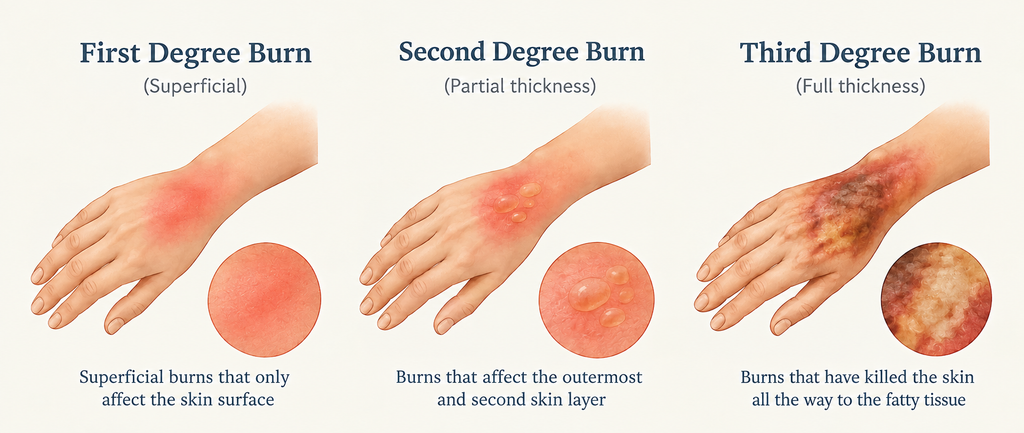
Superficial Burns (First-Degree)
These affect only the outermost layer of skin (epidermis). The skin may appear red, dry, and tender. Pain is common, but there is no blistering, and healing usually occurs without scarring.
Partial-Thickness Burns (Second-Degree)
These extend into the dermis, the deeper layer of skin. They often cause redness, swelling, blistering, and significant pain.
Full-Thickness Burns (Third-Degree)
These destroy all layers of the skin and may extend into deeper tissues. The skin may appear white, waxy, leathery, or charred. Because nerve endings may be damaged, the affected area can sometimes feel numb.
B) Burns by Source of Injury
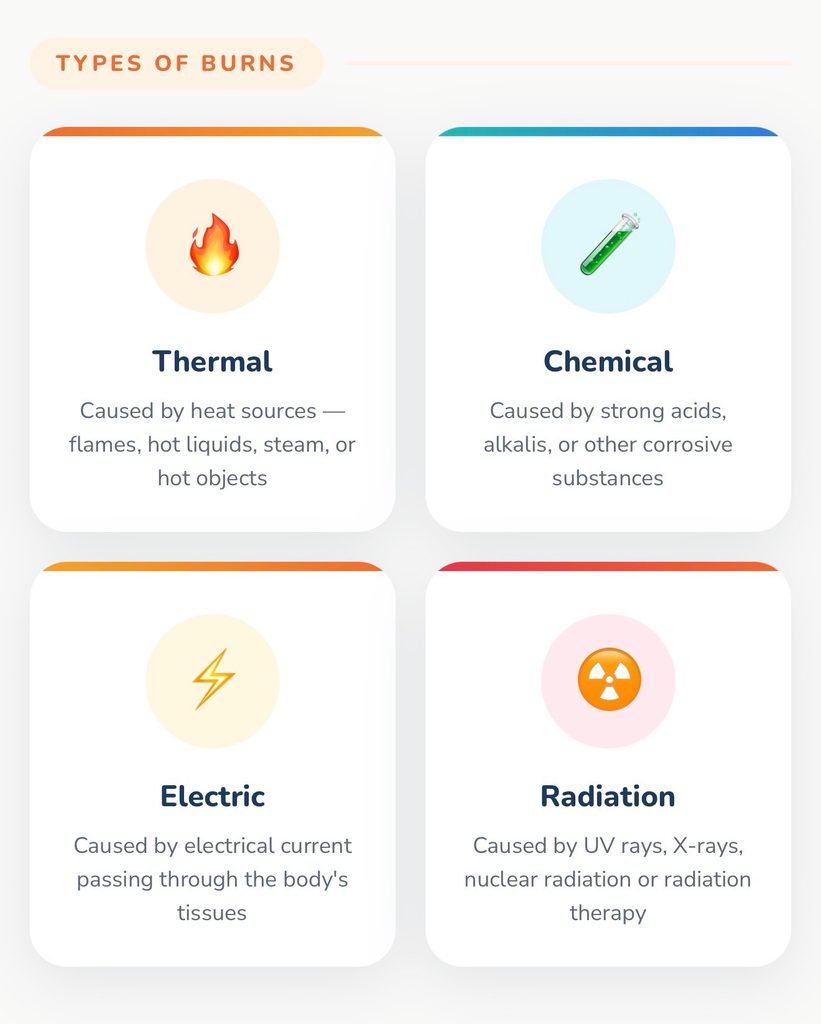
Thermal Burns
Caused by heat sources such as hot liquids, steam, flames, or hot objects. Scalds are especially common in young children, whose skin is more sensitive to heat.
Chemical Burns
Result from exposure to corrosive substances such as acids, alkalis, or industrial chemicals. Damage may continue even after exposure ends if the area is not treated promptly.
Electrical Burns
Caused when an electric current passes through the body. Although external injuries may appear small, internal damage can be severe and requires medical evaluation.
Radiation Burns
Caused by ultraviolet (UV) exposure or other radiation sources. Sunburn is the most common example and can range from mild redness to more serious skin injury.
Screenshot
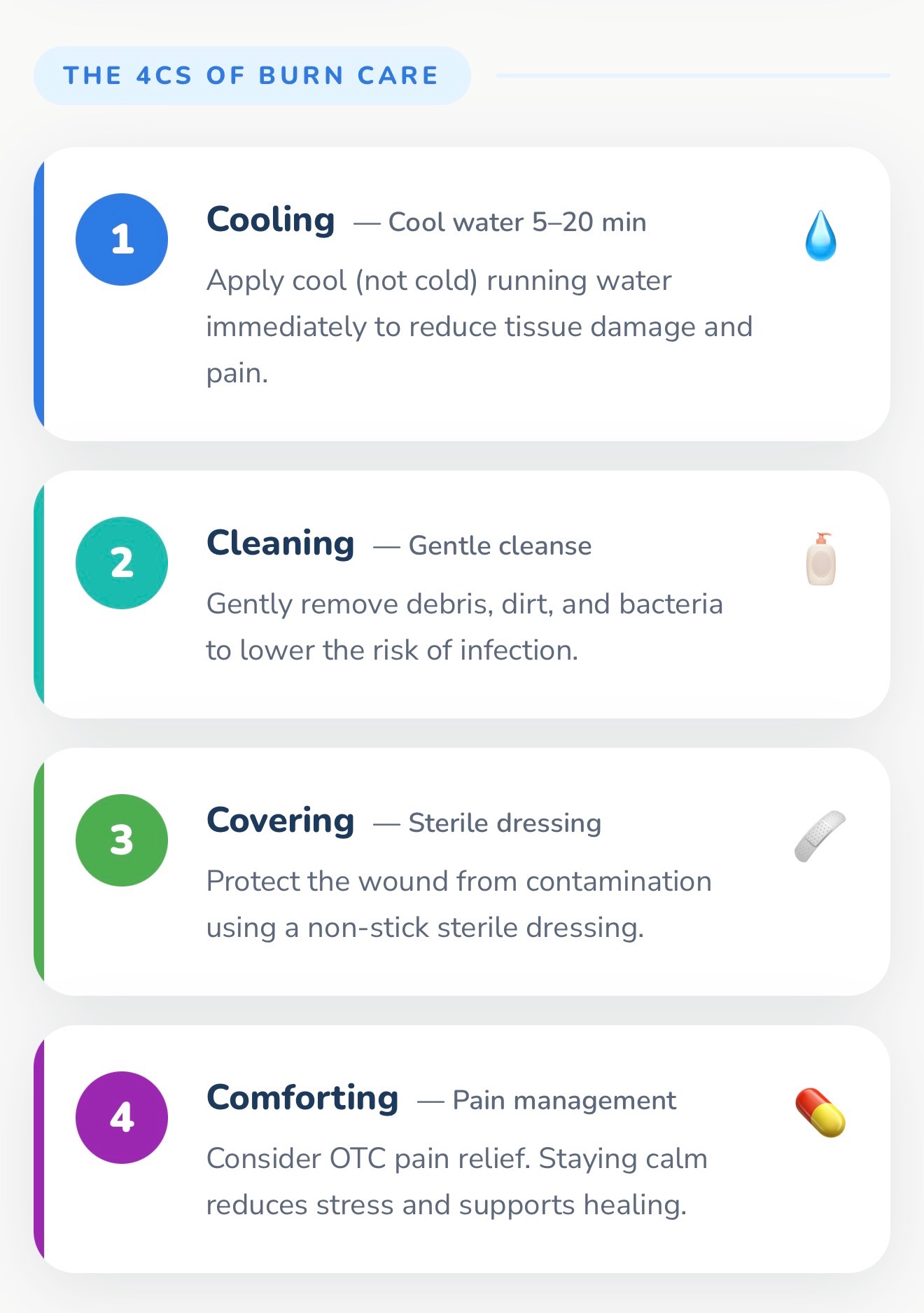
The Four C’s of Burn First Aid
Regardless of the cause, the immediate goals are to stop the burning process, cool the skin, and protect the injury.
1. Cease the Burning Process
Remove the person from the source of injury immediately. Ensure the area is safe before providing assistance.
2. Cool the Burn
Run cool (not cold) water over the burn for 10–20 minutes as soon as possible. Cooling helps remove residual heat from the skin and can reduce the extent of injury.
Never apply ice. Although it may seem soothing, ice can further damage already injured skin by restricting blood flow and causing additional tissue injury. Instead, use cool running water to help limit damage and relieve discomfort.
3. Avoid Overcooling Large Burns
Cooling is important, but prolonged cooling can cause dangerous heat loss, especially in young children and older adults. For larger burns, cool the affected area briefly, keep the person warm, and seek emergency care.
4. Cover and Protect the Injury
Remove jewellery and tight clothing before swelling begins. Do not remove clothing stuck to burned skin, as this may cause further injury.
After cooling, cover the burn with a clean, non-stick dressing. Leave blisters intact, as they provide protection against infection.
Avoid Common Home Remedies
Do not apply butter, oils, mayonnaise, toothpaste, or similar substances. These can trap heat, irritate damaged skin, and increase the risk of infection.
Treatment Depends on the Type of Burn
Heat, Fire, and Scald Burns
After cooling, cover with a clean, non-stick dressing. Avoid breaking blisters.
Chemical Burns
Brush off dry chemicals if present, then flush the area with running water for at least 20 minutes. Cover loosely and seek medical advice for significant burns.
Electrical Burns
Turn off the power source before helping the injured person. Even burns that appear minor may involve serious internal injuries and require urgent evaluation.
Radiation Burns and Sunburns
Move away from the source of radiation or sunlight. Cool compresses, moisturisers, or aloe vera gel may help soothe discomfort.
Watch for Signs of Infection
Seek medical advice if a burn becomes increasingly red, swollen, painful, produces discharge, or shows other signs of infection.
When to Seek Emergency Medical Care
Seek urgent medical attention for:
- Full-thickness burns that destroy all layers of skin
- Burns larger than the injured person’s palm
- Burns involving the face, hands, feet, groin, genitals, or major joints
- Electrical or chemical burns, even if they appear minor
- Burns accompanied by breathing difficulty, smoke inhalation, or signs of airway injury
- Burns caused by fires in enclosed spaces
- Burns affecting infants, older adults, or individuals with conditions that increase risk
Preventing Burn Injuries
Many burn injuries are preventable. Simple precautions can significantly reduce risk:
- Keep hot liquids away from children’s reach
- Check bath water temperature before use
- Wear oven mitts when handling hot items
- Use chemicals safely and follow instructions
- Practice sun protection
The Right Response Can Change the Outcome
A burn may happen in seconds, but the response immediately afterward can make a lasting difference. Knowing how to provide quick, correct first aid can help reduce damage, ease pain, and support recovery.
The first 20 minutes matter—being prepared can change the outcome.
Disclaimer: This article is intended for educational purposes only and should not replace professional medical advice. If you have concerns about a burn injury, consult a healthcare professional.

