


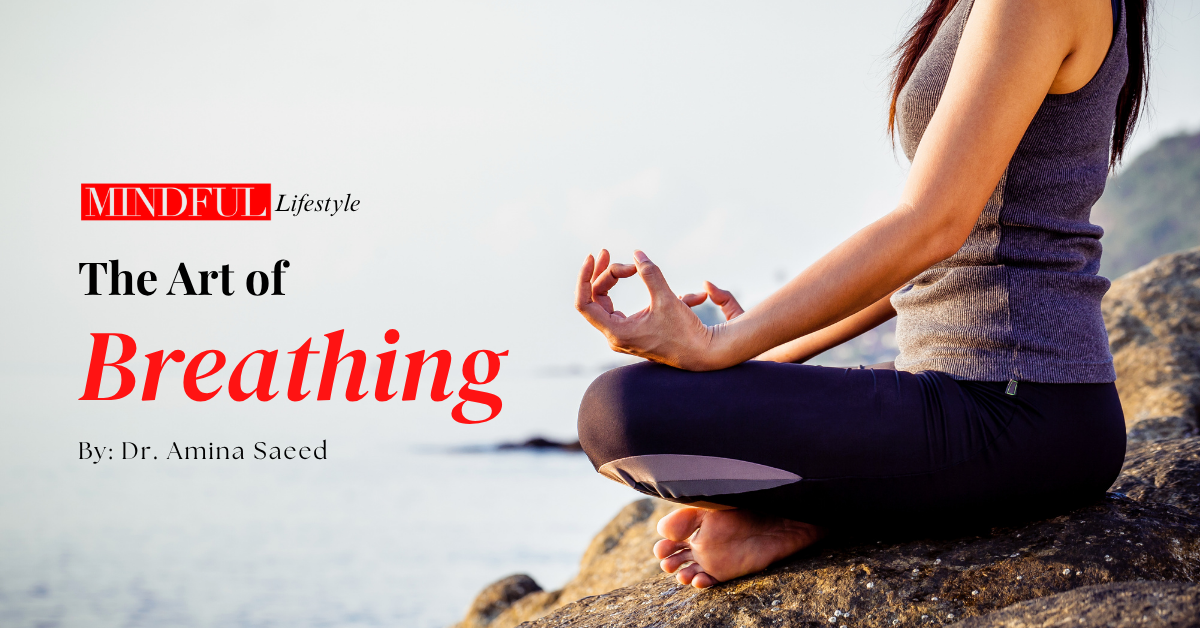
Harnessing the Power of Breath for Calm, Focus, and Inner Balance
Dr. Amina Saeed guides readers through the science and practice of mindful breathing, showing how simple daily exercises can transform stress, improve health, and reconnect mind and body.
From the moment you are born until the day you leave this ephemeral world, one thing stays with you — your breath. Yet how often do we actually pause to notice it, give it love and attention? Breath is a powerful tool that can help us navigate stress, anxiety, and life’s challenges. Unfortunately, we usually only become aware of it when it speeds up — under pressure, during anxiety, or strenuous activity — triggering the fight-or-flight response.

Now imagine the opposite: calm, measured breathing. Slowing the breath activates the body’s rest-and-digest mode, restoring balance from within. The first and most important step is simple: be aware of your breath. Sit with yourself. For yourself. Apney liye.
Here’s a step-by-step introduction to beginning your breathwork journey, building awareness, calm, and presence:
1. Dedicate a few moments daily for yourself, ideally in a quiet space free from electronic distractions.
2. You can lie flat on your back or sit upright. Posture is important — it signals to your body that something intentional is about to happen. If sitting, lean against a wall for spinal support.
3. Once comfortable, sit still. Pause fidgeting and correct your posture. The body requires movement; the mind requires stillness. Relax your shoulders, face, eyelids, jaw, and soften your expression.
4. Gently close your eyes and place your right hand on your belly. Inhale slowly through your nose, allowing your belly to expand outward. This is diaphragmatic breathing, engaging your lungs and diaphragm fully. Your hand is just a guide — there’s no need to push the belly or rush.
5. Exhale through your mouth, letting the belly naturally contract toward the spine. Allow the breath to flow with minimal effort; the diaphragm’s movement naturally drives the belly.
6. Your chest may move slightly, but not excessively.
7. Once comfortable with the rhythm, begin adding a count:
• Inhale: 5-4-3-2-1
• Exhale: 5-4-3-2-1
8. Repeat the cycle 10–12 times for the first few days, gradually increasing to 20–25 cycles.
Why Diaphragmatic Breathing Works — Science-Backed Benefits
• Calms Your Mind Instantly – Activates the parasympathetic nervous system via the vagus nerve, reducing stress and anxiety.
• Breathe Better, Live Better – Engages lower lungs for full oxygen exchange, leaving you energized and less breathless.
• Supports Heart Health – Strengthens vagal tone and baroreceptor function, lowering heart rate and supporting healthy blood pressure.
• Stops Panic in Its Tracks – Prevents shallow chest breathing and CO₂ imbalance, helping you stay calm and in control.
• Connects Mind & Body – Relaxes muscles, improves awareness, boosts emotional resilience, and restores inner balance.
Regular practice also improves digestion and gut function, relaxes muscles, and reduces neck and shoulder tension. With dedication, focus, and love, it can even improve sleep. In short, the art of breathing enhances emotional regulation, focus, and overall wellbeing.
The key is consistency. Dedicate a few minutes each day solely to yourself. Once you master the foundation, you can progress to advanced techniques like Anulom Vilom (alternate nostril breathing), Kapalbhati, Sheetali, and others. Breathwork comes with an emotional package — it connects you to your innermost self and awakens a range of emotions.
And always remember: The only way out is in.
The writer is a freelance journalist who works on issues related to mental health and well-being. She is a yoga expert and conducts meditation and breathing sessions.
@dr.amina.saeed

