


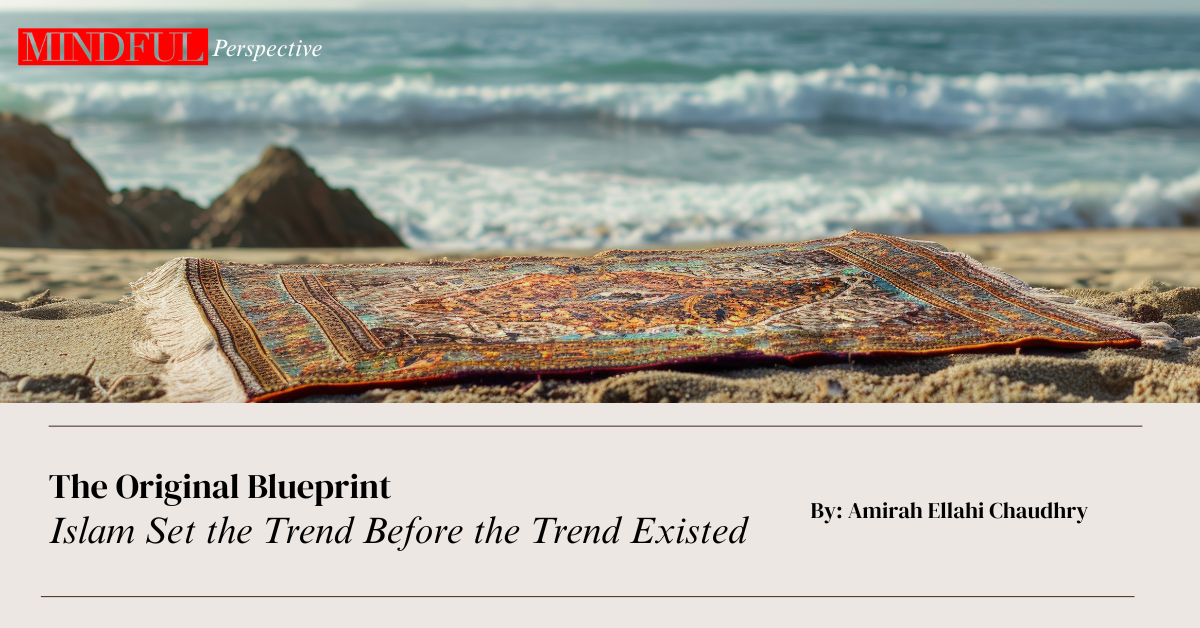
Islam Set the Trend Before the Trend Existed
Amirah Ellahi Chaudhry explores how Islamic wisdom guides modern health and balance.
The world is obsessed with wellness trends. Wake up at 5 a.m. to “unlock your potential.” Meditate daily to “find inner peace.” Skip meals for “detox” and “mental clarity.”
But here’s the truth: Muslims have been doing all of this — and more — for over 1,400 years.
We’ve been waking before sunrise for Fajr long before morning routine coaches turned it into a bestselling formula. We’ve been pausing in the middle of work, conversations, and daily life to pray five times a day — taking intentional moments to reset and refocus — centuries before wellness apps began sending “time to meditate” notifications.
What the world now calls “manifestation,” we know as dua — heartfelt, focused supplication. It isn’t about “sending energy into the universe,” but about turning directly to the Creator: asking, striving, and trusting. This is tawakkul — tie your camel, then leave the outcome to Allah.
Even the popular health trend of fasting for detox pales in comparison to Ramadan. Muslims fast not only for physical benefits, but for discipline, humility, and spiritual clarity. And science is catching up. A 2019 study published in The New England Journal of Medicine found that intermittent fasting improves metabolic health, reduces inflammation, and supports cellular repair — benefits Muslims have experienced for centuries.
Our Prophet (peace be upon him) taught: “The son of Adam does not fill any vessel worse than his stomach. A few mouthfuls are sufficient to keep his back straight. If he must eat more, then a third for food, a third for drink, and a third for air” (Sunan al-Tirmidhi). Long before “clean eating” and portion control trended online, moderation was taught as both a spiritual and physical principle.
Even natural remedies like honey, dates, and black seed oil — now celebrated as “superfoods” — have long been part of our tradition. And our daily structure — early rising, consistent movement, mindful pauses, intentional eating — mirrors everything modern wellness experts prescribe for longevity and happiness.
As Arianna Huffington said, “Well-being is not a luxury. It’s a necessity.” Islam recognized this necessity and embedded it into daily life. It isn’t a yearly retreat or a temporary 30-day challenge. It’s a rhythm — one that balances body and soul, every single day.
Perhaps the most profound lesson modern wellness culture can learn is this: true health is not just about the body you build, but the soul you nurture.
Islam didn’t follow trends. It set them.
And maybe that’s the reminder we need — that real wellbeing isn’t found in fleeting fads. It’s lived intentionally, consistently, and with gratitude. The blueprint has always been there. Only now is the world beginning to see what was there all along.

