



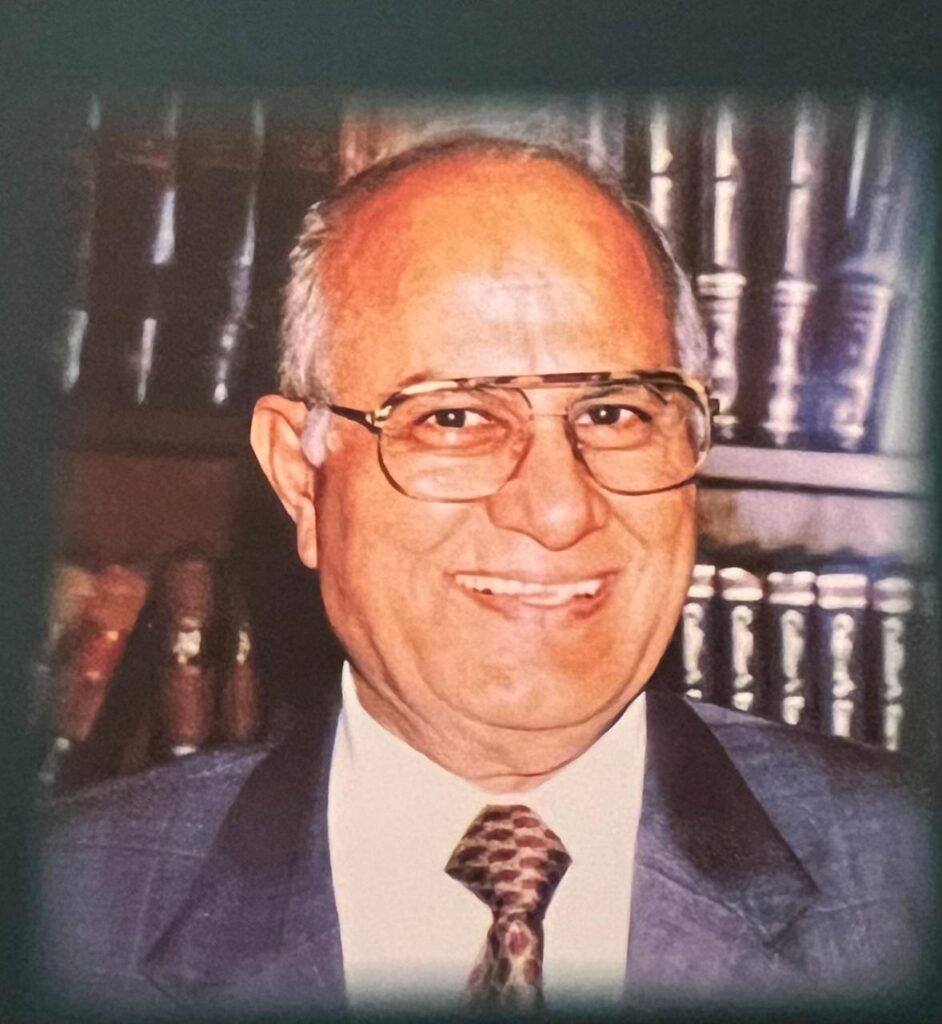
By Justice (R) Irshad Hasan Khan
Former Chief Justice of Pakistan
IntroductionAmong the modern voices of Islamic reflection that combine poetic expression with profound theological insight, Misbah Momin stands out for her distinctive spiritual clarity, emotional resonance, and reverence for sacred tradition. In her celebrated poem “The Day of Arafat”, published in Mindful (Issue 11, July–September 2025),
Misbah offers not merely a literary meditation but a deeply devotional rendering of one of the holiest days in Islam. Her language is neither ornamental nor detached; it is intimate, soul-anchored, and rooted in centuries of Quranic and Prophetic heritage. Misbah writes with the tenderness of a seeker and the precision of a student of sacred knowledge, drawing her readers into the timeless plain of Arafat, where pilgrims—dust-laden and tearful—stand beneath the sun, pleading for divine mercy.
With verses that evoke humility, majesty, equality, and redemption, she reminds us that the Day of Arafat is not confined to ritual or geography—it is an annual reckoning of the soul. Her work is not simply to be read; it is to be absorbed, wept over, and lived. This commentary attempts to do justice to her spiritual offering by unpacking its theological meanings, historical echoes, and emotional depths, and situating her poetic voice within the larger tapestry of contemporary Islamic spirituality.
The Call of Labayk
“Labayk Allahumma Labayk – here I come, my Lord, a day like none…”
The poem opens with the most iconic chant of Hajj, the Talbiyah, an ancient cry of devotion that has echoed from the lips of Prophets and pilgrims alike. “Labayk” literally means “I am here at Your service,” and it is a declaration that signifies surrender, readiness, and love. In Misbah’s framing, this utterance becomes the pilgrim’s soul-call on a day unlike any other.
Theologically, “Labayk” recalls the primordial covenant mentioned in the Qur’an:
“Am I not your Lord?” They said, “Yes, we bear witness.”
(Surah Al-A’raf 7:172)
The Talbiyah is not just an invocation, it is a reawakening of that original divine human relationship. Misbah captures this immediacy by anchoring it in the context of Arafat: a day when heaven opens, when sin is suspended, and when the plea of the broken reaches the Throne of the Merciful.
The Descent of Mercy
“As befits His Majesty, He descends to the lowest heaven,
To speak of those who humbly wait.”
Here, Misbah invokes the Hadith Qudsi’s traditions that describe the divine descent on the Day of Arafat— a unique spiritual event when Allah draws near in a manner “befitting His Majesty.” According to Sahih Muslim, the Prophet (peace be upon him) said:
“There is no day on which Allah frees more people from the Fire than the Day of Arafat. He draws near, then He boasts of them to the angels…”
The poet is careful in her wording “as befits His Majesty” preserving Islamic theological boundaries about divine transcendence while conveying the nearness and tenderness of Allah’s presence. The phrase “those who humbly wait” evokes the image of millions of souls standing, pleading, hopeful, and utterly dependent. In this waiting is the essence of tawheed: to rely on none but Him.
A Day of Emancipation
“No day releases souls more free,
From hell’s harsh grasp than Arafat’s plea.”
This powerful couplet captures the central theological promise of Arafat: deliverance from Hellfire. The contrast between “hell’s harsh grasp” and “Arafat’s plea” is profound. One is a symbol of Divine Justice; the other, a symbol of Divine Mercy. The Day of Arafat tips the scale toward forgiveness.
As recorded in Hadith, Allah releases more people from the Fire on this day than on any other. Misbah’s poetry encapsulates this reality by showing that, despite one’s sins or shortcomings, it is the sincere plea of the soul that counts. Her poetic structure gives each line the weight of testimony, making the reader feel the urgency of this freedom.
Heaven’s Pride in the Penitent
“With pride He speaks to angels high,
‘Behold My servants, lifted high!’”
This is a direct echo of several hadith, in which Allah proudly displays His servants to the angels, praising their sincerity and sacrifice. What’s remarkable is the shift in roles — the angels, typically exalted, now witness human greatness. Misbah captures this inversion with grace. The dusty pilgrim, clothed in white and trembling with repentance, becomes the subject of Divine pride. That, in itself, is a powerful testament to Allah’s mercy — that He would boast of those who cry for forgiveness.
Completion of Faith
“On this day, Allah’s perfect grace,
Completed faith for all His race.”
This refers directly to the Quranic verse revealed on the Day of Arafat during the Prophet’s Farewell Hajj:
“This day I have perfected for you your religion…”
(Surah Al-Ma’idah, 5:3)
This verse is considered by Islamic scholars to be among the most momentous revelations in the history of Islam. Misbah weaves it into her verse seamlessly, reminding the reader that the culmination of Prophethood, the sealing of Divine law, and the gift of Islam as a way of life were finalized on this very plain. Her phrase “perfect grace” reflects not just theological completion, but spiritual satisfaction — that Islam is a comprehensive mercy for all of humanity.
The Dust of Devotion
“They come disheveled, dusted, worn,
From every hill and pass they’re borne.”
This verse humanizes the pilgrims. There is no glamor here, only sincerity. The dusty and disheveled appearance is, in fact, beloved to Allah. According to Hadith, Allah specifically praises His servants in this state of disarray, because it signifies humility and submission.
Misbah’s poetic sensibility captures this with reverence. The pilgrimage becomes a leveling field where the king and the laborer, the scholar and the simple soul, stand shoulder to shoulder, each seeking divine pleasure.
Time Suspended, Mercy Revealed
“From dawn’s first light to evening’s glow,
Each breath, each moment seems to know.
A lifetime’s worth in seconds spun,
Forgiveness shining beneath the sun.”
These lines express how time itself bends on the Day of Arafat. Pilgrims testify that hours pass like seconds; that a single sincere supplication in that window carries the weight of a lifetime. Misbah captures this compression of time with literary elegance. The sun becomes a witness to redemption, and breath becomes worship. It is a lyrical way of capturing a metaphysical truth: that on Arafat, Divine Mercy is not measured by time but by sincerity.
Oneness and Brotherhood
“In white we stand, all ranks erased,
By love and mercy interlaced.”
The uniform of Ihram is the great dissolver of human distinctions. There are no uniforms of privilege, no badges of honor — only the white cloth of humility. Misbah’s phrase “ranks erased” speaks not just of social status but of all false hierarchies: nationalism, race, wealth, and ego.
Her second line, “by love and mercy interlaced,” beautifully evokes the divine qualities that bind humanity together — Rahmah (mercy) and Mawaddah (love). In this union of souls, the Ummah becomes visible.
Echoes of Prophethood
“And here once stood our Prophet (SAW) dear,
Upon the Mountain of Mercy near…”
These lines recall the Farewell Sermon at Arafat, Prophet Muhammad’s (peace be upon him) final public address, wherein He affirmed the inviolability of life, property, and dignity, and emphasized the equality of all believers.
Misbah’s use of the term “Mountain of Mercy” anchors the location in both history and feeling. It reminds us that the Prophet stood not as a conqueror, but as a warner and a mercy to mankind. She paints this image with quiet reverence, allowing the reader to feel both historical gravity and spiritual proximity.
Departure and Transformation
“But when the time to journey calls,
We leave Arafat as mercy falls.
Souls forgiven, prayers arranged,
Hearts laid bare and lives exchanged.”
Misbah emphasizes that Arafat is not an end, but a turning point. Pilgrims leave the plain not just physically exhausted but spiritually transformed. Her phrase “lives exchanged” suggests that what they bring back is not what they came with — they trade sin for forgiveness, distance for nearness.
For All Who Yearn
“For those who yearn, whose hearts still strive,
May Ar-Rahman call them while they’re alive…”
This closing benediction is deeply inclusive. It extends the sanctity of Arafat to those who have not yet arrived there. Misbah recognizes that yearning is a form of worship — that Allah’s door remains open to the broken-hearted even outside the ritual act of Hajj. The prayer that Ar-Rahman may “call them while they’re alive” is both gentle and profound: a wish that every believer tastes this nearness before their final return.
Conclusion
Misbah Momin’s “The Day of Arafat” is more than a poetic reflection. It is a map of mercy, a cry of the penitent soul, and a rekindling of spiritual memory. With literary elegance and theological depth, she takes the reader on an inner Hajj — from Labayk to liberation, from dishevelment to dignity, from isolation to Divine intimacy.
This commentary has sought to unpack her verses not merely as lines of verse but as luminous doorways to deeper realities. Each stanza reflects a facet of Islamic belief, history, and worship all orbiting around the blazing core of Divine Mercy.
In an age of distraction and detachment, Misbah’s poem brings us back to what matters most: our covenant with the Divine, our unity with creation, and our hope for forgiveness. May her words inspire hearts across generations, and may Allah grant us all a standing beneath His shade on the Day when no other shade will remain.

