


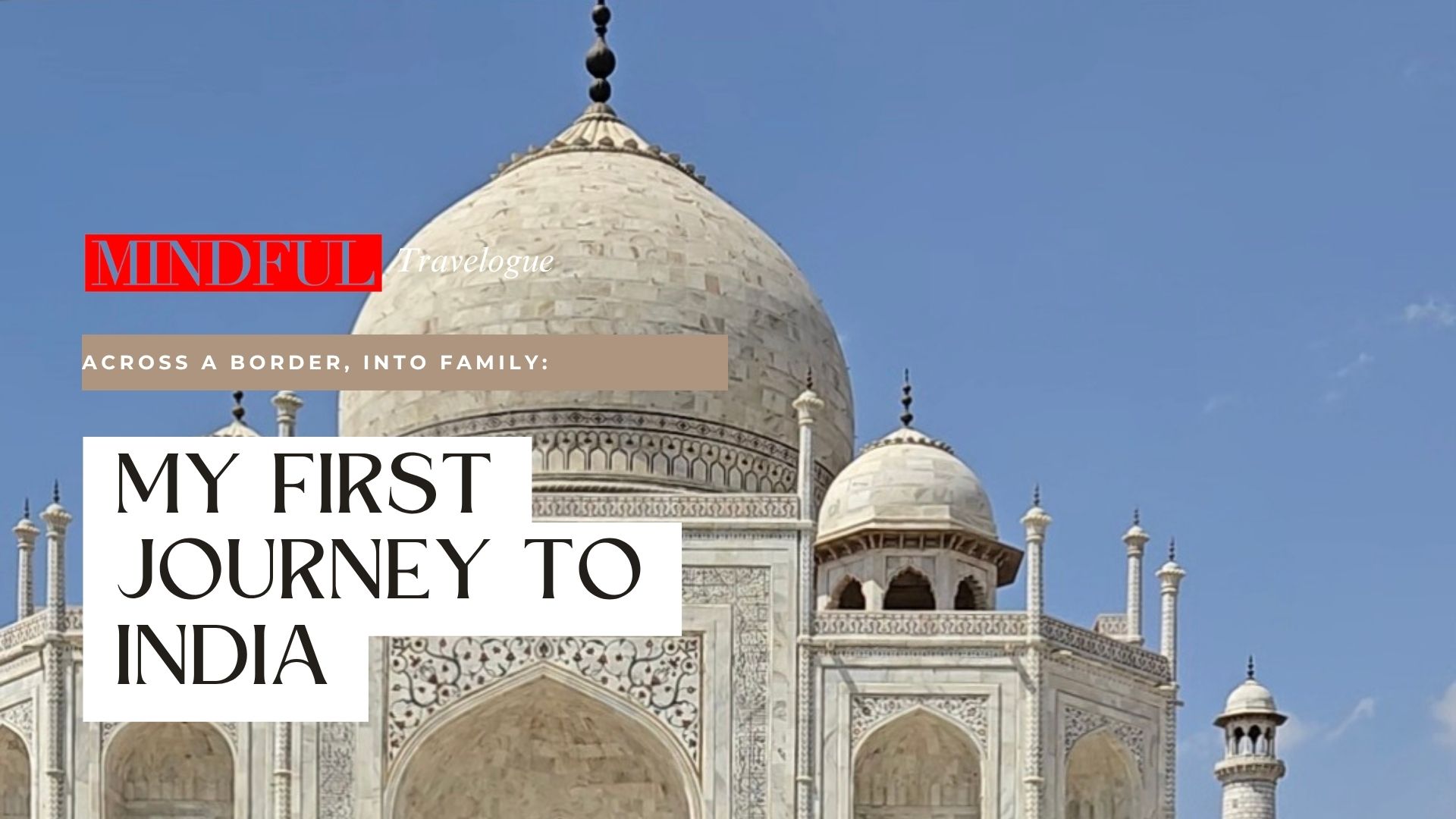
Tamour Sheikh, a Canadian of Pakistani origin, reflects on his first journey to India, discovering that beyond borders, politics, and history lies a powerful truth: family, shared heritage, and the human connections that reveal how much more unites us than divides us.
For most people, booking a trip is simply a matter of choosing dates and finding flights. For me, travelling to India became a seven-month exercise in patience, paperwork, and uncertainty.
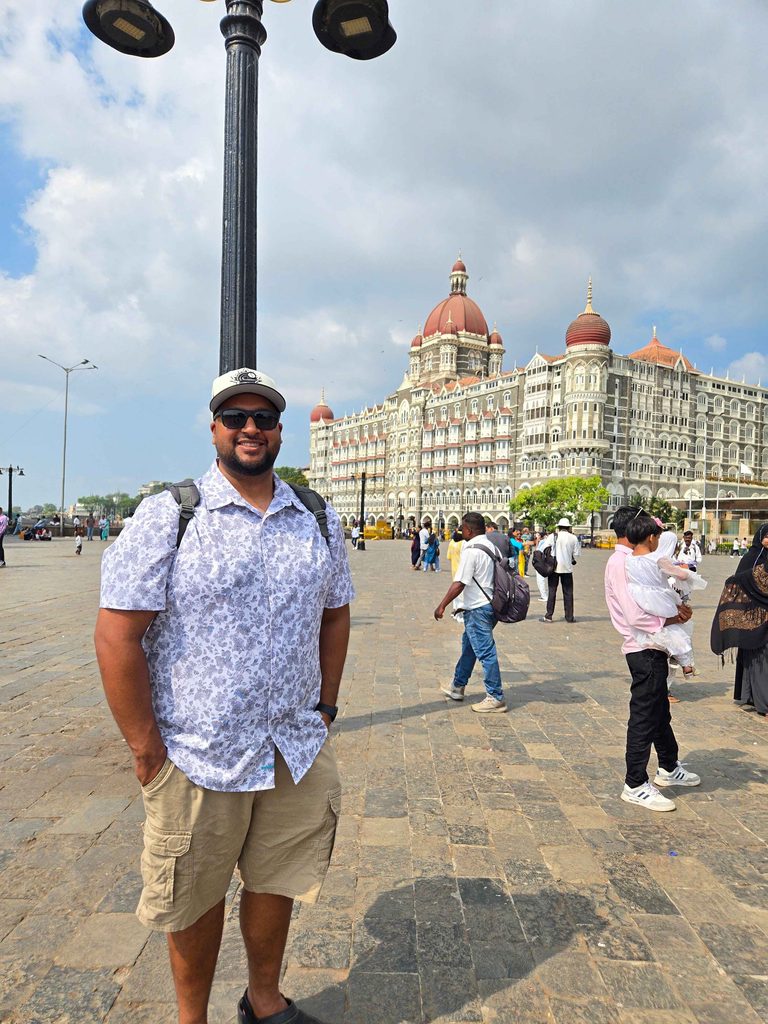
As a Canadian of Pakistani origin married to an Indian woman, obtaining a visa was never going to be straightforward. By the time approval finally arrived, the journey had already become much more than a holiday. It was a chance to step into a world that had always felt both familiar and distant.
My wife and I were married in 2022, but I had never met much of her extended family in person. This trip would change that. Travelling alongside my wife, her parents, and our two-year-old son, I arrived in India with an open mind and a curiosity to experience a country that had long existed in my imagination through stories, family conversations, cricket, and history.
Our first stop was Mumbai, the city my wife’s family calls home.
Mumbai is difficult to describe without contradictions. It is chaotic yet organized, crowded yet welcoming, intensely modern while deeply rooted in tradition. Each morning, I woke up at the Trident Hotel on Marine Drive to views of the Arabian Sea, watching the sun illuminate Colaba as fishermen headed out and the city slowly came alive. The gentle sea breeze carried hints of salt and diesel, while the quiet of dawn was gradually replaced by the familiar rhythm of honking traffic.

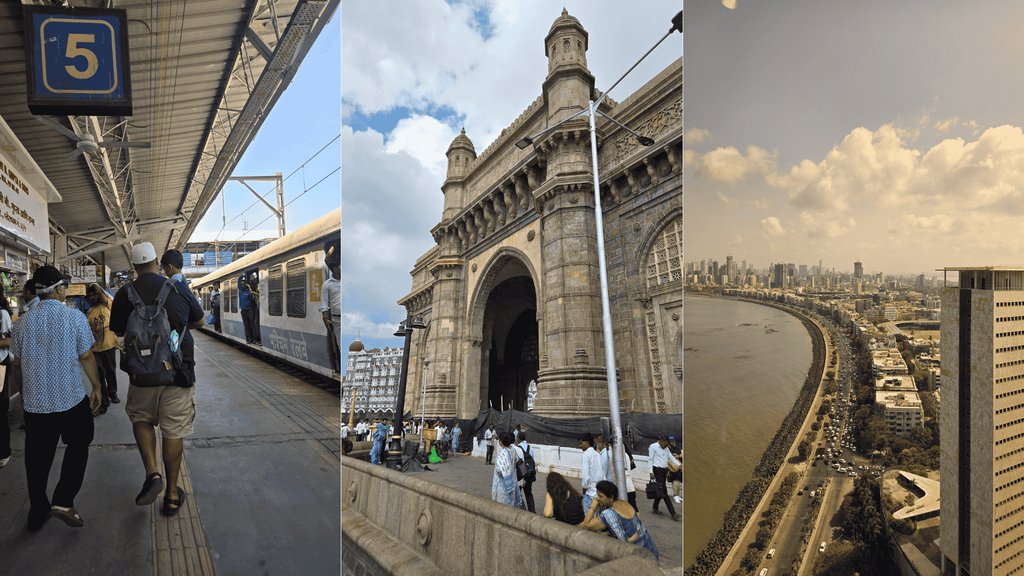
One of my first stops was the Gateway of India. Standing beneath its towering arches and watching ferries move across the harbour, I reflected on the journey it had taken just to stand there. For years, India had been something I knew through stories and perceptions. Now, it was real.
Cricket, unsurprisingly, became one of the defining moments of the trip.
Through an incredible stroke of luck, I connected with a local Mumbaikar who invited me for breakfast after hearing about my search for IPL tickets. The match was sold out, and tickets seemed impossible to find. Yet, through a few phone calls and some behind-the-scenes favours, he managed to secure seats for us.
It wasn’t just any cricket match. It was my father-in-law’s first time watching a live game in a stadium, and it was a Virat Kohli match in Mumbai — Royal Challengers Bengaluru versus Mumbai Indians. Sitting together among tens of thousands of passionate fans, surrounded by chants, drums, flashing lights, and an electric atmosphere, created one of those rare memories that stays with you long after the final ball is bowled.
One of my favourite Mumbai experiences was travelling on the city’s iconic local train from Churchgate to Bandra. Packed with commuters, students, and vendors, it offered a glimpse into the everyday rhythm of Mumbai. As the train moved through neighbourhoods and stations, I realized that no guided tour could capture the city quite like experiencing it alongside the people who keep it moving.
Of course, no visit to Mumbai is complete without exploring its food.
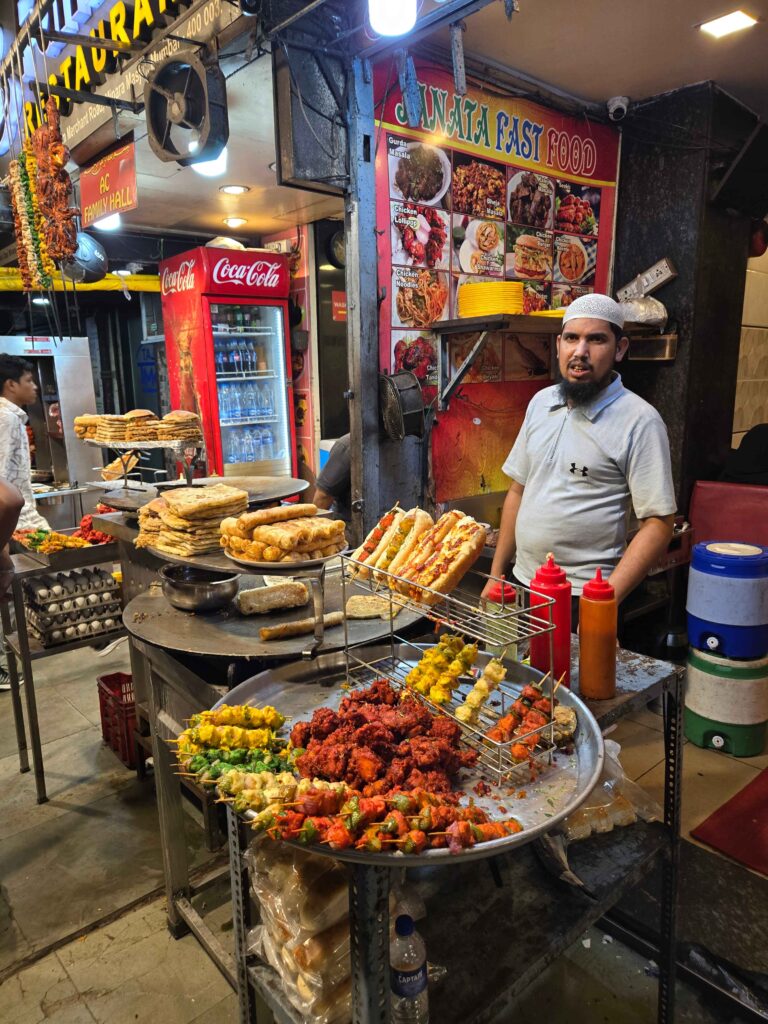
Some of my favourite memories came from simply wandering through the city in search of the next meal. At Nur Cafe, the mutton kebabs were rich, smoky, and impossibly tender. At the legendary Aram Vada Pav outside Chhatrapati Shivaji Maharaj Terminus, a humble 38-rupee snack lived up to every bit of its reputation.
Then there was Mohammed Ali Road.
Arriving near Minara Masjid just before the evening rush felt like stepping into another world. Smoke rose from grills, vendors called out over one another, motorcycles squeezed through narrow lanes, and every few steps brought a new aroma — charcoal, spices, freshly baked naan, and sizzling kebabs. The energy was infectious. It reminded me of parts of Lahore and Karachi, yet remained unmistakably Mumbai.
We also explored Bandra, often considered the heart of Bollywood, primarily on my wife’s cousin’s Vespa scooter. Like countless South Asians, I couldn’t resist visiting Shah Rukh Khan’s neighbourhood.
Whether you are a fan or not, his presence feels woven into the cultural fabric of the city. Nearby, Bandra Fort offered sweeping views of the Arabian Sea and the Bandra-Worli Sea Link stretching across the horizon.
From Mumbai, we travelled north to Jaipur, using it as a base for one of the experiences I had most anticipated: visiting the Taj Mahal.
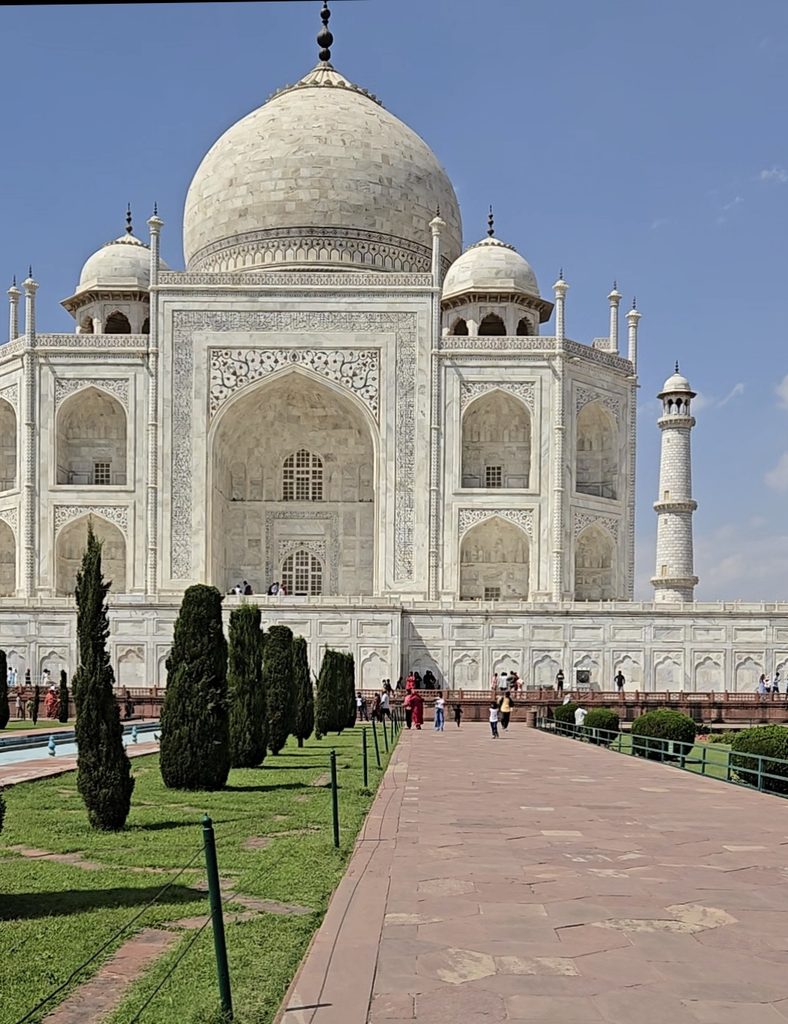
No photograph truly prepares you for your first glimpse.
The symmetry, craftsmanship, and way sunlight reflects off the marble feel almost surreal. Yet what struck me most was not only its grandeur, but its familiarity. Certain details reminded me of Lahore’s Badshahi Mosque. Standing there, I found myself thinking about how deeply intertwined the histories of India and Pakistan remain, despite decades of political separation. The architecture seemed to speak a language I already understood.
Being so close to Lahore geographically stirred emotions I had not expected. Borders often dominate conversations between our countries, but standing before monuments built centuries before those borders existed offered a different perspective. The shared history felt tangible.
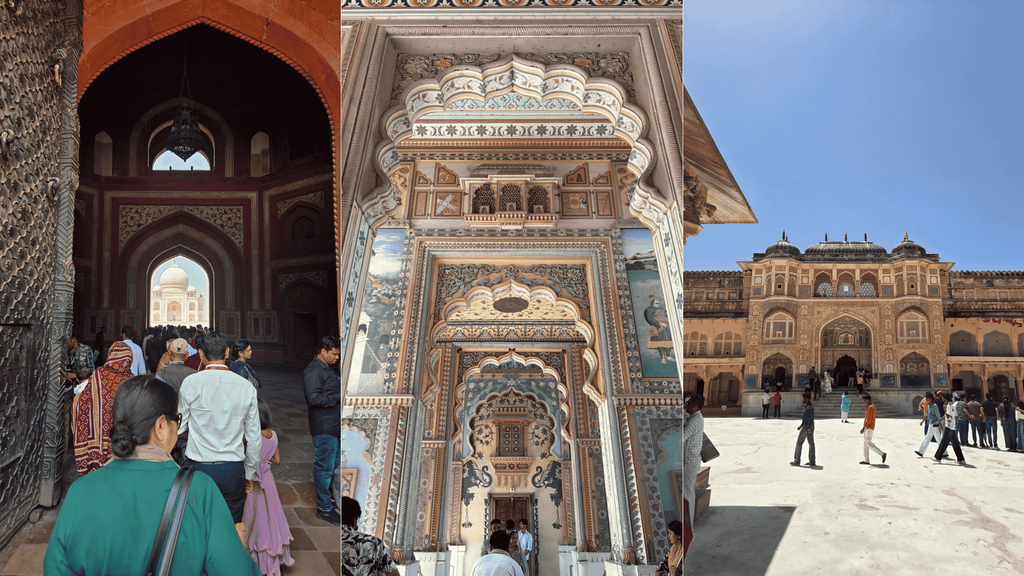
The forts of Agra created a similar feeling. Massive sandstone walls, intricate carvings, hidden courtyards, and breathtaking views revealed new details at every turn. I could have spent entire days simply studying their architecture.
One of Rajasthan’s most unexpected highlights was HaathiGaon, an elephant village outside Jaipur. Home to approximately 65 elephants and 65 families, the village operates as a unique community where each family cares for one elephant. Beyond the animals themselves, what fascinated me was the way the village functioned — with a school, a mosque, homes, and generations of families sustaining a way of life built around these magnificent creatures.
Watching children play while elephants wandered nearby felt almost timeless.
Another encounter during our time in Jaipur stayed with me. We met a Hindu shopkeeper named Hanuman whose Muslim employees spoke warmly about working for him. One employee shared that during Ramadan, Hanuman encouraged them to observe their fasts and made accommodations to support them. During prayer times, he reminded them to step away and pray.
It was a simple interaction, but a powerful reminder that everyday acts of kindness often tell a more complete story than the narratives we inherit.
After returning to Mumbai, we joined my wife’s extended family for a road trip from Panvel to Mahabaleshwar.

The landscape transformed dramatically as we climbed into the Western Ghats. Urban skylines gave way to rolling hills, dense forests, winding roads, and cooler mountain air. At Le Méridien Mahabaleshwar Resort & Spa, our days were spent swimming, relaxing among towering trees, and occasionally spotting monkeys moving through the forest canopy.
It was also strawberry season.
I have eaten strawberries in many places, but nothing compares to tasting them fresh in Mahabaleshwar. At Bagicha Corner, we enjoyed strawberries and cream and mulberries and cream that tasted unlike anything I had experienced before. Sweet, fresh, and vibrant, they captured the essence of the region.

One afternoon, we visited Tapola Lake, often called the “Mini Kashmir” of Maharashtra. Gliding across calm waters while green hills reflected on the surface provided a beautiful contrast to Mumbai’s constant energy.
On the drive back, we stopped at Bhiwandi Darbar for lunch. Surrounded by greenery, the roadside restaurant served hearty dhaba-style dishes that tasted even better after hours on the road. It was one of those unexpected stops that often become the most memorable parts of a journey.
Looking back, what stays with me most is not any single monument, meal, or destination.
It is the people.
I arrived in India determined to experience it without preconceived notions. What I found was a country far more familiar than I expected. Mumbai impressed me with its development, diversity, and energy. As a Muslim traveller, I found halal food everywhere, heard “salaam” exchanged regularly, and experienced kindness from people of different faiths and backgrounds.
Perhaps that should not have surprised me.
The stories we often hear about one another tend to focus on politics, tensions, anddivisions. Yet travel has a way of cutting through those narratives. Conversations with strangers, meals shared with family, and simple gestures of kindness reveal realities that headlines often miss.
And while I will always remember the Taj Mahal, the IPL match, the street food, and the strawberries of Mahabaleshwar, my favourite memories belong to the smallest traveller among us.
Our two-year-old son embraced every moment with curiosity and wonder. Whether chasing pigeons near the Gateway of India, waving at strangers, spotting monkeys in the hills, or meeting relatives for the first time, he experienced the journey without any understanding of borders, politics, or history.

Perhaps there is a lesson in that.
For him, India was simply a place filled with family, adventure, laughter, and love.
And in the end, that is exactly what it became for me too.

