


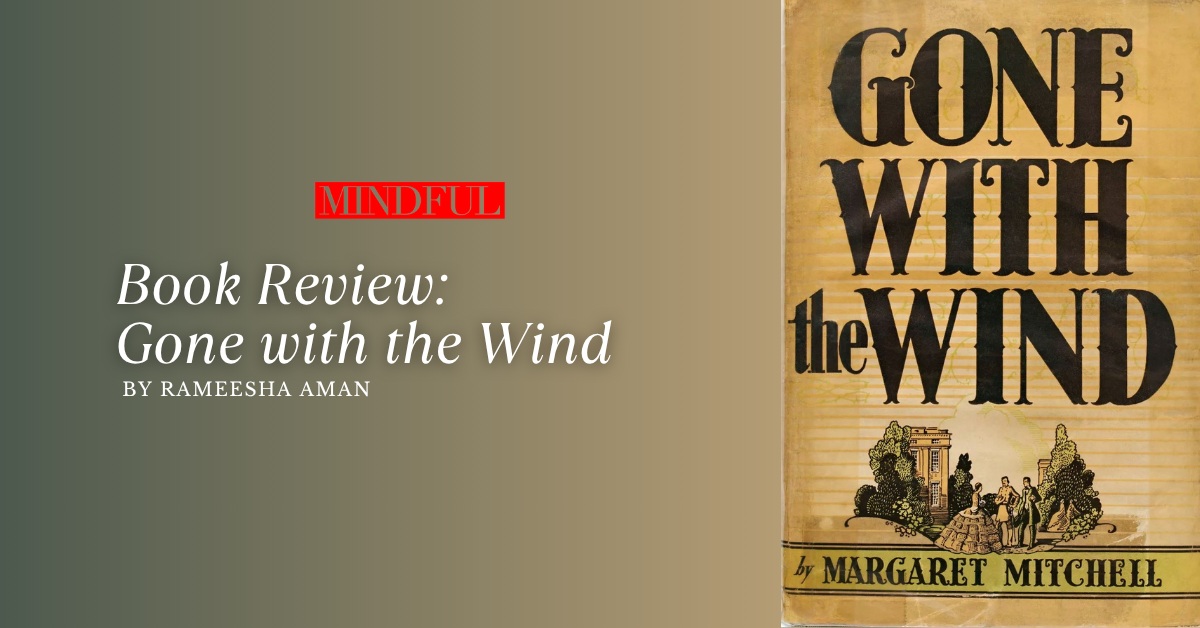
Review by Rameesha Aman
Margaret Mitchell’s classic novel “Gone with the Wind” captures everything that makes up life. In recent years, it’s been criticized for its portrayal of slavery, race issues, and the Confederacy. Despite this, it endures as a grand tale of eloquent love, the pursuit of happiness in the direst circumstances, and the unyielding human will to overcome overwhelming odds.
Gone with the Wind follows Scarlett O’Hara, a tempestuous, stubborn, and strong-willed heroine. Scarlett is as unforgettable as any character in classical fiction, and it is perhaps her flaws that make her one of the most compelling female protagonists in modern literature. Headstrong, rarely introspective, and unabashedly selfish, she begins the story pining for Ashley Wilkes, immediately scheming to win his proposal upon learning he may marry someone else. This pursuit unfolds against the backdrop of the American Civil War and the collapse of the Old South, which also threatens her beloved home, Tara.
As the war progresses, Scarlett never abandons her pursuit of Ashley Wilkes, even as she marries and is widowed shortly thereafter. She also flirts with the attention of the rogue blockade runner, Rhett Butler. Torn between these affections, she marries more than once and successfully protects her land from Yankee soldiers. Eventually, the death of another husband brings her back to Rhett Butler, only to face the tragic loss of her daughter. Undeterred, Scarlett continues to wait for Ashley until she finally realizes that it is Rhett she truly loves — but by then, the realization comes too late.
The legacy of Gone with the Wind has been further cemented by its immensely popular film adaptation starring Vivien Leigh and Clark Gable. Over the years, both the book and the movie have been criticized for glamorizing race relations, slavery, and the Confederacy. While these connotations cannot be ignored, it is also impossible not to admire the novel’s eloquent dialogue, vivid imagery, and compelling narrative. Readers in South Asia may find parallels between the Old South’s antiquated values and aspects of their own cultural history, drawing comparisons between events surrounding the Partition and the post-war treatment of Southern states in America.
More often than not, Gone with the Wind embodies a longing for the past, for the way things were before being swept away by the winds of time. In our fast-paced modern age, revisiting this classic reminds us why preserving connections to history and heritage is important. Despite its flaws, the story resonates with a fundamental human desire: the longing to return to familiar and cherished times and places.
rameesha763@gmail.com

