


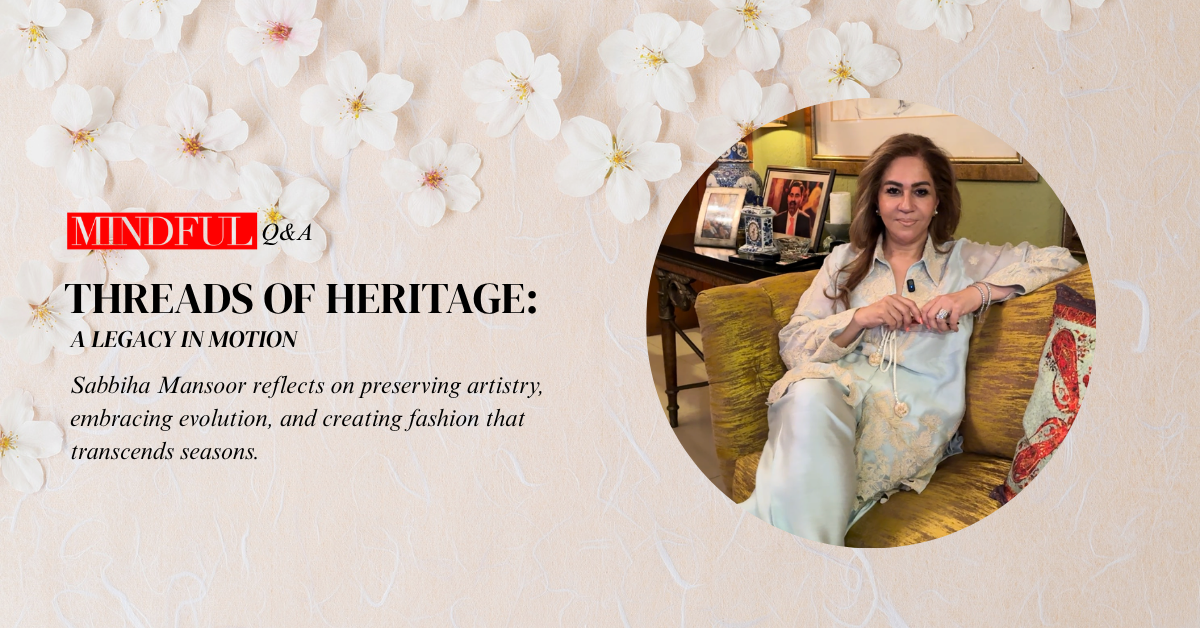
For over two decades, Sabbiha Mansoor has built a design language rooted in heritage, femininity, and restraint. In an industry often driven by constant reinvention, she has remained devoted to something far more enduring: authenticity. Drawing from her Kashmiri heritage, traditional craftsmanship, and the women who shaped her early understanding of beauty, Mansoor’s work exists at the intersection of memory and modernity.
In conversation with Durrah Aman, she reflects on preserving artistry, embracing evolution, and creating fashion that transcends seasons.
After more than two decades in fashion, what has the industry taught you about reinvention — both creatively and personally?
Fashion has taught me that reinvention is not always about becoming someone new; sometimes, it is about returning to your roots with a deeper understanding of who you are.
Since beginning my journey in 2001, I have witnessed immense changes in trends, technology, and consumer preferences. Yet, one thing has remained constant: authenticity has the power to endure.
My Kashmiri heritage has always been a guiding force, as have the women in my maternal and paternal families who shaped my appreciation for beauty, tradition, and grace. For me, design has always been about staying connected to those roots while allowing myself to evolve.
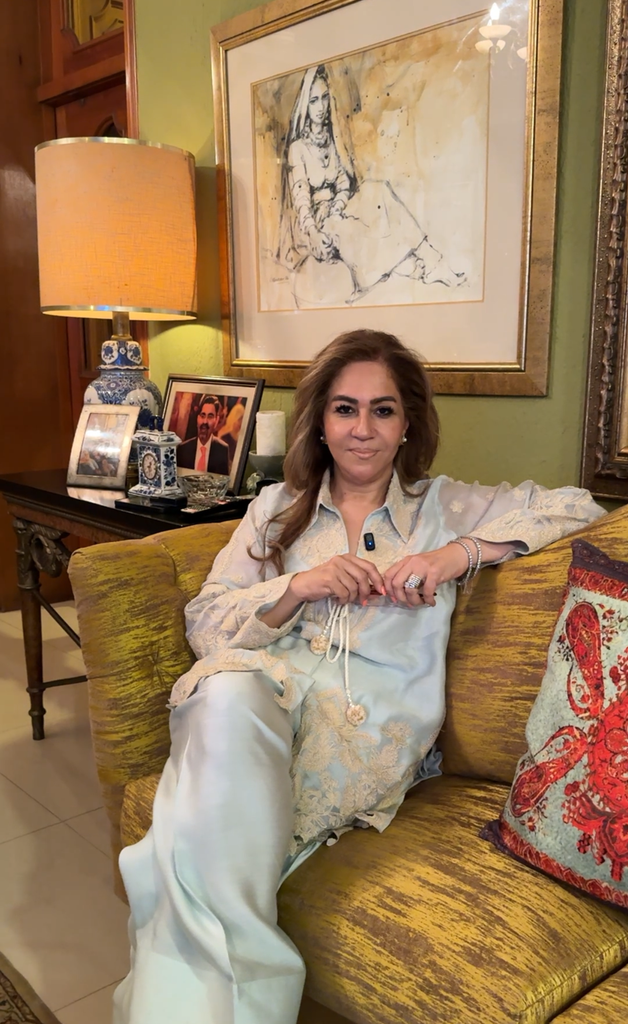
Personally, this journey has taught me patience, resilience, and the importance of growing without losing my identity.
Your designs carry a soft, elegant, and feminine aesthetic. Who is the woman you design for?
I design for a woman who chooses grace over excess. She appreciates craftsmanship, tradition, and understated elegance.
She is confident in her femininity and does not feel the need to follow every fleeting trend. Whether young or mature, she looks for pieces that feel meaningful — clothing that reflects her personality, her culture, and her sense of self.
Your collections often feature florals, pastels, and timeless silhouettes. What continues to draw you toward these elements?
I have always been inspired by softness and quiet beauty. Florals and pastels possess a timeless elegance — they have a gentleness that never feels overwhelming.

Traditional silhouettes also hold a sense of familiarity and emotional connection. I believe clothing should complement a woman rather than compete with her. The most beautiful pieces are those that allow the woman wearing them to shine.
Fashion often celebrates the new. Have you ever felt pressured to chase trends rather than stay true to your design philosophy?
There is always pressure within fashion to constantly reinvent and keep pace with trends. However, with time, I have understood that longevity comes from staying authentic.
My design language is an extension of who I am, and I have always believed in remaining true to that. Trends may change with every season, but craftsmanship, elegance, and cultural identity remain timeless.
Kashmiri embroidery is deeply rooted in history and artistry. What draws you to this craft, and how do you reinterpret it for the modern woman?
Kashmiri embroidery carries centuries of history, artistry, and emotion within every stitch. My connection to it is deeply personal because of my own Kashmiri heritage.
Growing up surrounded by the richness of Kashmiri culture gave me an appreciation for its textiles, motifs, and craftsmanship from an early age. The paisleys, chinar leaves, floral vines, and nature-inspired patterns are not simply embellishments; they tell stories of a landscape, a people, and generations of artisans.
I have always been inspired by traditional Kashmiri shawls, vintage embroidery archives, and handcrafted techniques passed down over generations. Preserving crafts such as kamdani, aari embroidery, and delicate single taanka work remains central to my vision.
These techniques represent patience, precision, and a human touch that feels increasingly rare today. Every stitch carries the emotion and dedication of the artisan behind it.
However, I also believe heritage must breathe and evolve. I reinterpret these traditions through contemporary silhouettes, softer colour palettes, lighter fabrics, and more effortless compositions — creating pieces that honour the past while belonging to the present.
What are Pakistani women looking for from fashion today that differs from two decades ago?
Today’s Pakistani woman seeks individuality and versatility. Fashion has moved beyond being limited to specific occasions; women now want pieces that fit into different parts of their lives while maintaining elegance.
There is also a deeper appreciation for craftsmanship, fabric quality, and the story behind what they wear. Women today want fashion with meaning.
How has Instagram changed the relationship between designers and their audiences?
Social media has transformed fashion into a more intimate and interactive experience. Designers can now share their creative journey and connect directly with their audiences.

At the same time, it has accelerated the pace of the industry. With constant visibility comes greater pressure, making it even more important for designers to protect their originality and creative voice.
Was there ever a moment when you questioned your path in fashion?
Like any creative journey, there have been moments of exhaustion and uncertainty. But fashion has always been deeply personal to me.
Whenever I see the artisans behind the work or witness the emotional connection women have with my designs, I am reminded of the purpose behind this journey.
What is something people admire about fashion from the outside but rarely see behind the scenes?
People often see the beauty, the glamour, and the final creation, but they do not always see the immense dedication behind it.
Every collection carries countless decisions, challenges, deadlines, and responsibilities. Designers must constantly balance creativity with production, business realities, and maintaining the quality of their work.
Fashion requires not only artistic vision but also resilience and emotional endurance.
Your work feels nostalgic yet contemporary. Are you consciously preserving a certain idea of culture and craftsmanship?
Very consciously. I believe fashion is a form of storytelling — it preserves memory, culture, and identity.
My work is deeply inspired by Kashmiri craftsmanship: heirloom shawls, traditional motifs, handcrafted borders, and the delicate floral patterns that carry generations of history.
Techniques such as kamdani, aari embroidery, and fine single taanka work represent patience and artistry. They remind us of the value of handmade beauty in a world that is increasingly moving toward mass production.
For me, preserving heritage does not mean recreating the past exactly as it was. It means allowing traditions to evolve gracefully and remain meaningful for future generations.
As someone who has witnessed multiple generations of fashion consumers, do you think younger audiences value craftsmanship differently today?
I believe younger audiences are becoming more conscious of craftsmanship. They are interested in the story behind garments, handmade details, sustainability, and the people who create them.
Their aesthetics may differ from previous generations, but there is a growing appreciation for authenticity and heritage.
Where do you find creative inspiration beyond fashion?
Inspiration can come from anywhere — nature, architecture, poetry, vintage textiles, travel, or even a quiet personal memory.
Sometimes an old photograph or a fleeting moment can spark the beginning of an entire collection. I am especially inspired by cultural history and the beauty of traditional craftsmanship.
Looking back, what did your younger self misunderstand about success?
Earlier in my journey, I thought success was about reaching a destination. With time, I learned that true longevity is built through consistency, patience, and sincerity.
Creativity grows through experience, observation, and emotional depth. Today, I value purpose and balance far more than recognition alone.
What legacy do you hope your brand leaves behind in Pakistani fashion?
I hope my brand is remembered for preserving heritage with grace and authenticity.
More than trends, I hope it represents timeless elegance, cultural pride, and respect for the artisans whose hands bring these creations to life. If my work helps keep these traditions alive for future generations, that would be the greatest legacy.

